Explicit Relationships
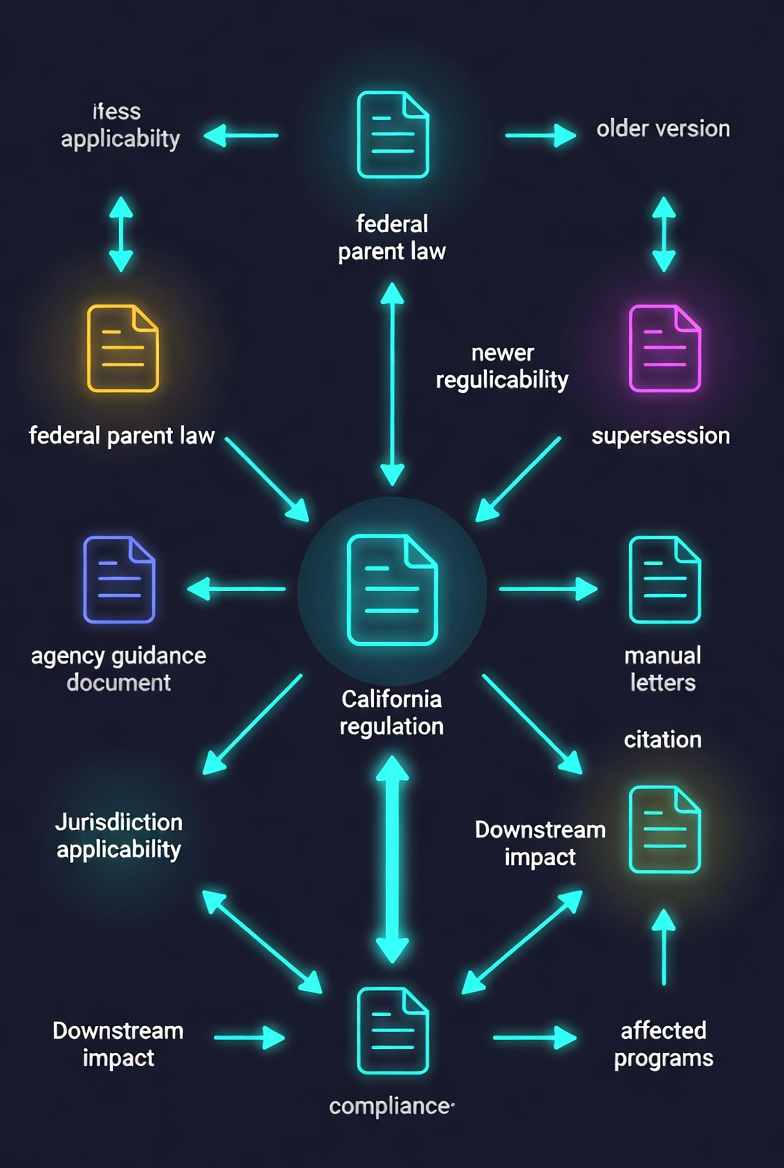
Citations, hierarchy, supersession, and downstream dependencies are preserved and traversable.
Context Engineering
on steroids.
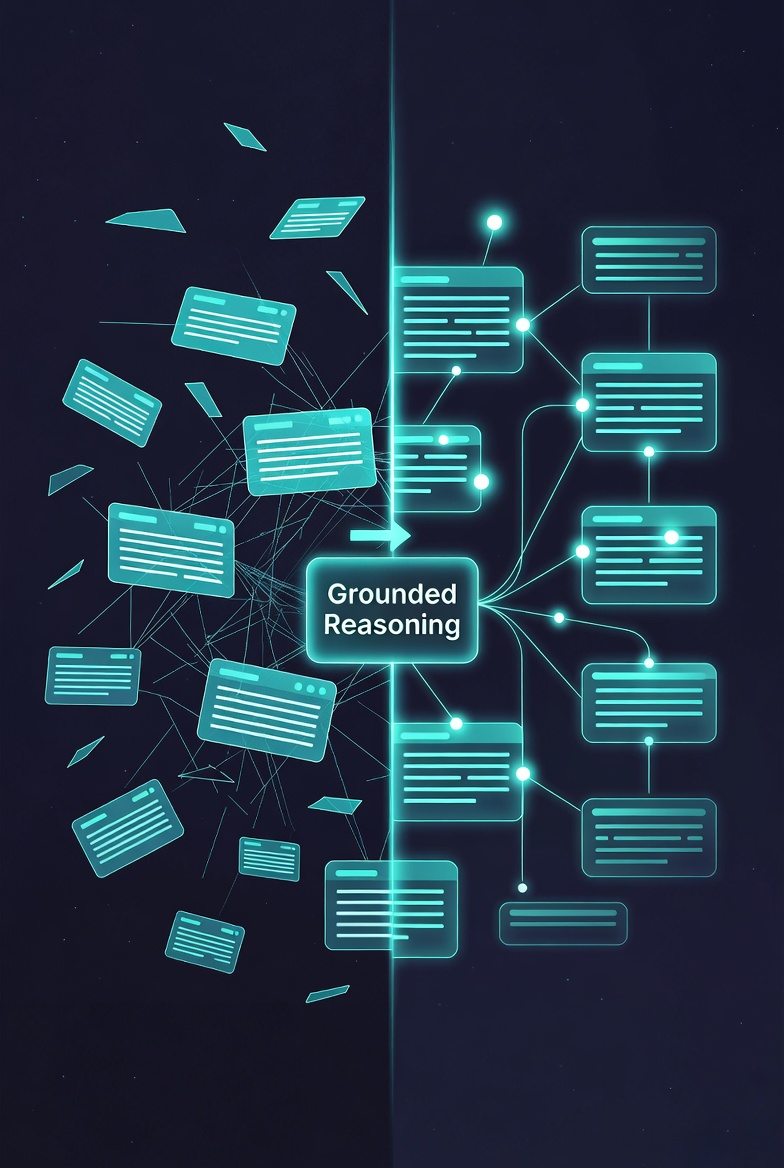
Most retrieval systems treat documents as text. Alexander treats them as knowledge objects with explicit authority, lineage, and relationships.
The problem
Engineers write like engineers. Lawyers write like lawyers. In specialized domains, everything sounds similar — but the technical specifics matter enormously.
“Similarity-based retrieval breaks down when domain-specific text all sounds similar and the source material expands. You need explicit relationships and provenance to know what actually governs.”
The solution

Citations, hierarchy, supersession, and downstream dependencies are preserved and traversable.
Every answer carries its full evidence path — where it came from, what it inherits, and what it overrides.
Reduces hallucination and drift by giving both people and models the real structure.
Every answer comes with its evidence chain. Read it. Question it. Drill into any link. Toss what’s noise, add what’s missing, and when it’s right — save it. That saved chain becomes a reusable context unit, ready for the next question, the next teammate, the next agent.
No forms. No tagging sprints. No “please document this.” Curation happens in the natural rhythm of asking and verifying — the same skepticism you’d apply to any answer becomes the signal that makes the next answer better.
This is Alexander’s pattern language for the AI era: living context, shaped by the humans who use it, growing more trustworthy with every interaction. Your team stops re-deriving the same answers. Your AI stops hallucinating around the same gaps. Knowledge compounds — quietly, behind the scenes, as a byproduct of work you were already doing.
Ask. Verify. Save. Reuse. That’s the whole loop.
Built for real authority
Built by SourcePath Labs • Grounded in real operational authority